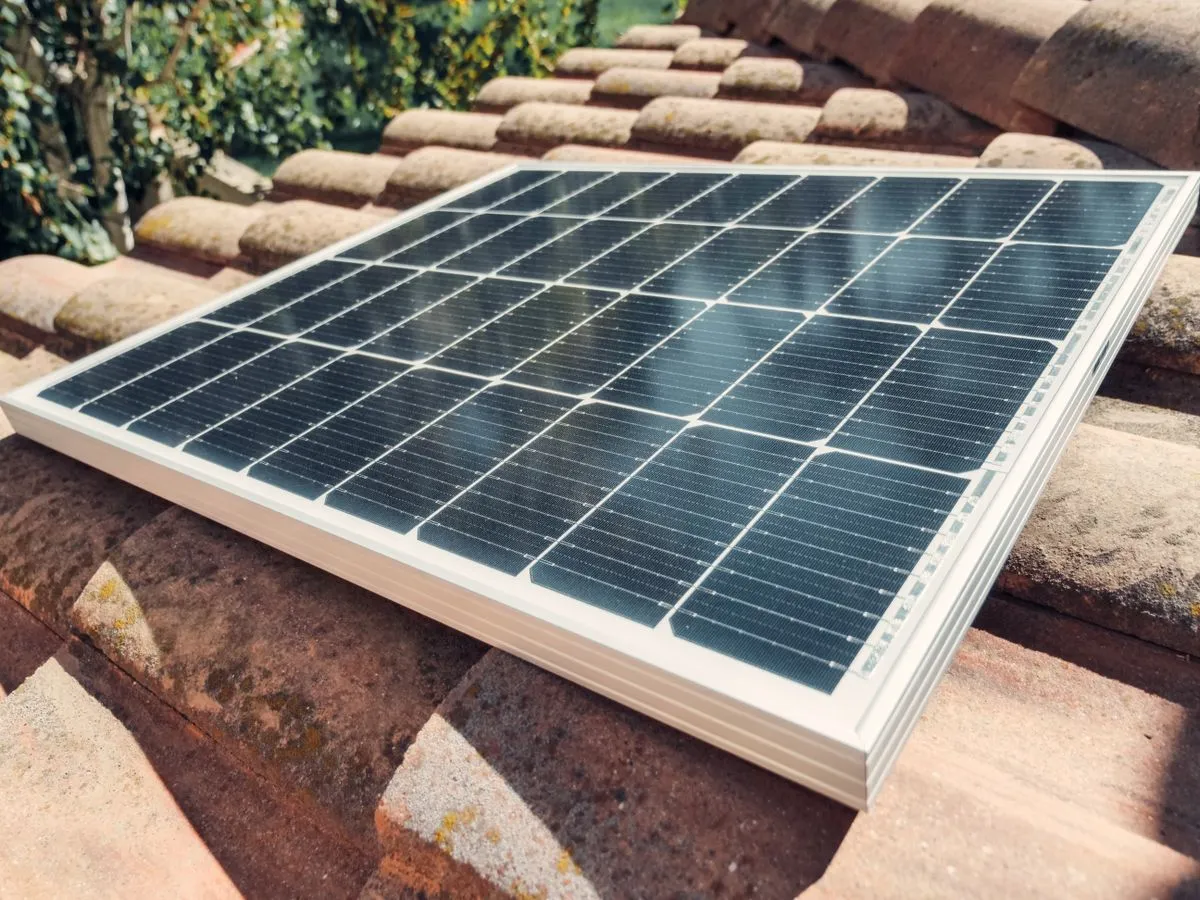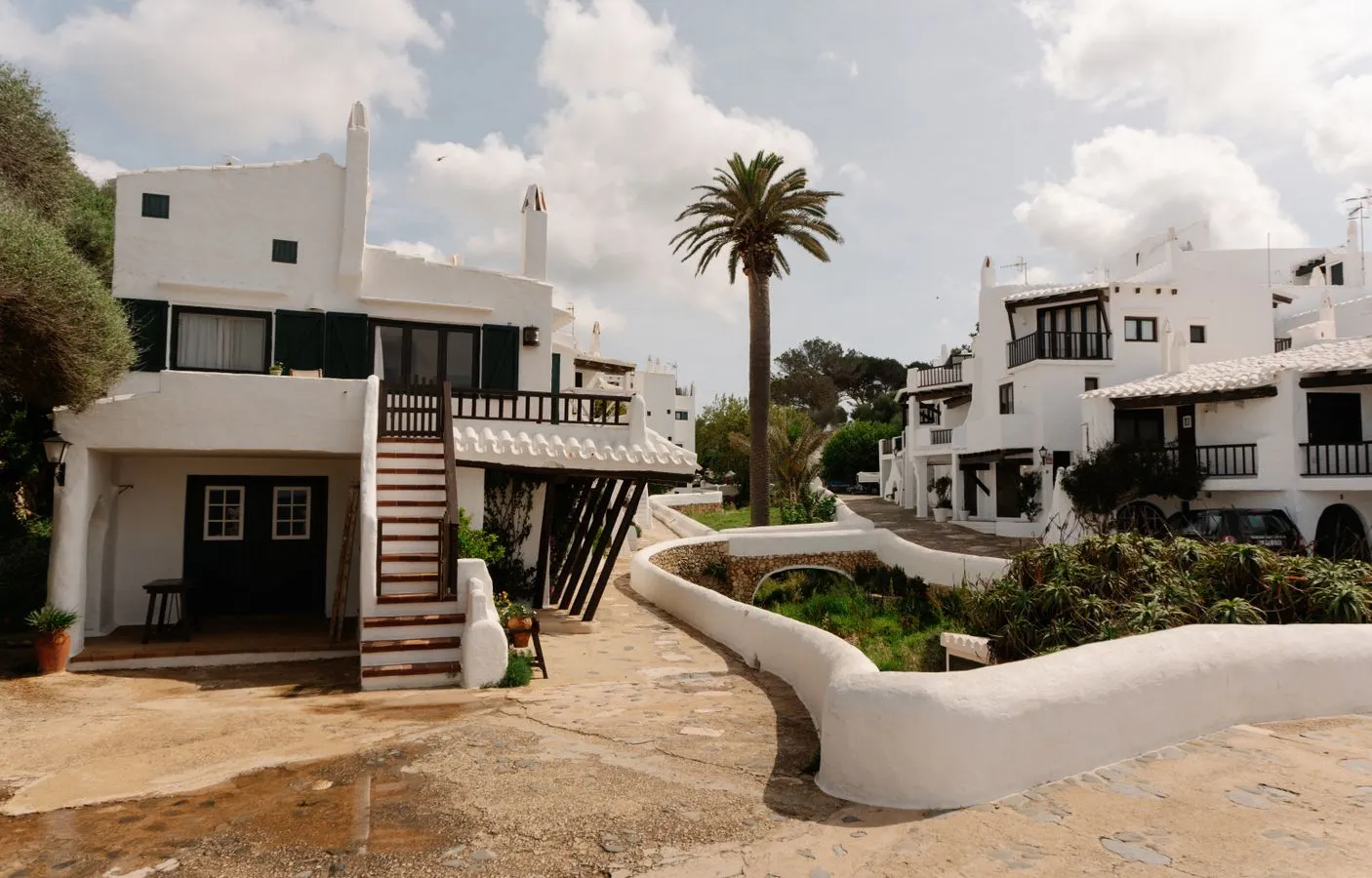
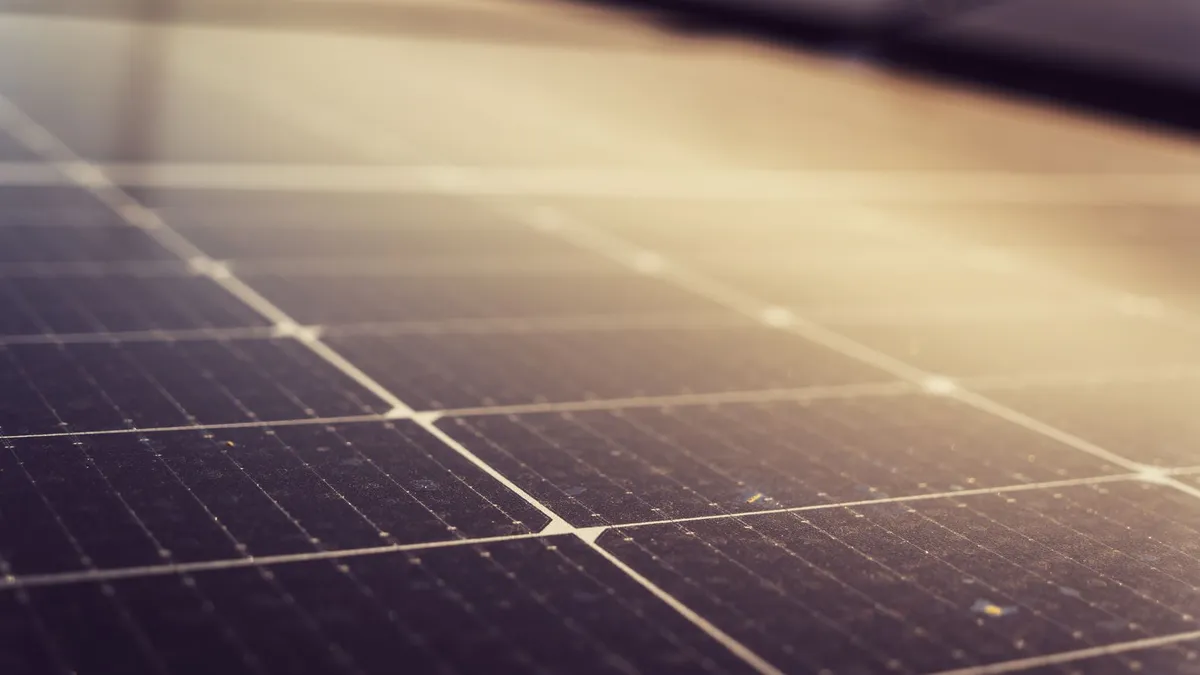
Solar panels have a reputation for asking nothing of you, and it is half deserved: no moving parts, no consumption, and output held for more than 25 years. But the question VATSOLAR gets after every installation is not whether they need maintenance, it is how often. And most of the articles answering that question were written for a house in the middle of the mainland.
The short answer
In the Balearic Islands, what works is to check the glass every three or four months and run one technical inspection a year on the rest of the system. That is not the generic advice to clean twice a year, and the difference is not arbitrary: the islands add three factors the mainland calculation leaves out, and all three act on the same surface.
Sea salt, Saharan dust episodes, and the hardness of the mains water. The first attacks the hardware, the second covers the glass, and the third turns a badly done clean into a new problem. They are worth understanding separately, because each calls for a different response and only one of the three is solved with a cloth and water.
Why island maintenance is not mainland maintenance
Sea salt
A house in Portocolom, in Ciutadella or on the north coast of Ibiza sits inside a permanent salt aerosol. The house does not need to touch the water: wind carries salt particles inland and deposits them on any exposed surface. On panel glass, salt does two things. It forms a thin layer that cuts transmittance, like any dirt, and more importantly it accelerates corrosion in everything metal around it: the aluminium frame, the structural fixings, the mounts, the junction boxes.
That second part is the one that matters, because it is not an output problem but a service-life problem. A dirty panel produces less today and produces again tomorrow once you clean it. A corroded structure does not come back.
Saharan dust
Saharan dust episodes are a familiar phenomenon in the Balearics and they have a direct, measurable effect on output. Research into photovoltaic soiling losses across Europe puts southern Europe at an average close to 46 Saharan dust intrusion days a year, and places soiling losses in Spain in a band that typically runs from 1 to 7% of generated energy, with far higher peaks during individual events.
Saharan dust is fine and sticks harder than ordinary dust, especially when it arrives with muddy rain and dries in place. A heavy episode leaves a layer that normal rain does not fully wash away, and that is the classic case where an off-calendar check pays for itself.
Lime in the tap water
This is the factor almost nobody mentions and the one that causes the most surprises. Mains water across much of Mallorca is very hard: in Palma it sits between 40 and 90 French degrees, and EMAYA itself describes the water drawn from the aquifers and springs as hard, scale-forming and highly mineralised, because of the limestone ground.
On a solar panel that has an immediate practical consequence. Wet the glass with a hose and let it dry in the sun, and the dissolved carbonate stays on the surface as a whitish film. The panel ends up reflecting light worse after the clean than before, and that layer is far harder to remove than the dust you set out to get rid of.
How often they actually need cleaning
The honest answer is that the calendar is the wrong criterion. The two factors that decide are rainfall and roof pitch.
Rain is the primary cleaning system of any photovoltaic installation. When it rains regularly and the roof has enough pitch, water carries the dust away and the glass stays reasonably clean without intervention. The problem in the Balearics is summer: dry months combined with dust episodes mean there can be long stretches with no natural wash at all, and that is exactly the period of peak irradiation, when every percentage point of loss shows up most on the bill.
Pitch decides how much work the rain does when it finally arrives. A rooftop study in Madrid measured losses of around 6% on low-tilt modules after 52 days without rain. On a well-pitched roof, much of that same dust would have slid off with the first downpour. That reads directly onto the Balearic building stock: flat roofs and shallow installations over Arabic tile build up more and self-clean worse than a steeply pitched roof.
Putting that together, the interval that makes sense on the islands is:
- A visual check every three or four months. It does not mean going up on the roof: often it is visible from an upstairs window or the yard, and the system monitoring flags it before the eye does.
- Clean when the check calls for it, not by calendar. Generally once or twice a year on pitched roofs with regular rain, and more often on flat roofs or near dirt tracks, greenhouses and farmland.
- An extra check after a heavy dust episode, particularly if it came with muddy rain.
- One annual technical inspection of everything else, which is a different job and is covered below.
One detail that helps you decide without climbing up: if monitoring shows a gradual output decline across comparable clear days, accumulated dirt is the most likely cause. A sudden drop, by contrast, is usually not dirt and calls for a technical check.
How to clean them without damaging them
Cleaning a solar panel is simple, which is precisely why it often gets done badly. The rules that count:
- Never on hot glass. Cold water on glass at 60 degrees is an unnecessary thermal shock. Do it early in the morning or at dusk, never at midday.
- Never at pressure. A pressure washer can force the seals on the frame and the junction box. Ordinary hose pressure is enough.
- Low-mineral water. This is where Balearic water hardness changes the standard advice. Use softened water, collected rainwater or reverse-osmosis water if you can. If you have to use the tap, do not let it dry on its own: pull a rubber squeegee across and dry it off.
- A cloth or a soft-bristled brush, and little else. No abrasive pads, no metal scrapers, no solvents and no aggressive products. The anti-reflective layer on the glass is thin and does not come back.
- Never stand on the panels. The glass takes distributed load, not a person’s weight on one point. The microcracks that causes are invisible and cut that cell’s output permanently.
- If the roof is not safely accessible, do not go up. It is the most common and most sensible reason to hire the job out.
What else gets checked, beyond the glass
Cleaning is the visible half and the less important one. The annual inspection is what prevents the expensive failures, and it covers:
- The inverter. It holds the most electronics and gives the earliest warnings. Error logs, ventilation and dust filters, and operating temperature all get reviewed. On the islands, fine dust builds up in the ventilation grilles and makes the unit run hotter than it should.
- Connections and wiring. DC connectors are where contact problems appear most often, and a poor contact generates heat.
- The structure and its fixings. Near the sea this is the critical check. You look for rust spots, bolts that have lost torque, and any contact between dissimilar metals, which is where galvanic corrosion advances fastest.
- Electrical protections and earthing. Residual-current devices, breakers and surge protection.
- The seals where cables pass through the roof. A water leak into the roof costs far more than anything else on this list.
- Fixings and bird nests. The gap between panel and roof is attractive to birds, and droppings are corrosive and cast permanent shade.
What cleaning cannot fix: hardware on the seafront
If the house is on or near the seafront, part of the problem is not solved by any cleaning frequency: how well the hardware resists salt-laden air. That is decided the day the equipment is chosen, not afterwards.
There is a specific international standard for it. IEC 61701 rates photovoltaic modules against salt mist corrosion by exposing them to a controlled sodium chloride aerosol over repeated cycles. The standard defines eight severity levels, and for marine environments the industry reference is to require level 6 as a minimum.
It is stated on the module datasheet and almost nobody asks for it. It is worth asking, along with the same criterion applied to the mounting structure and the fixings, which corrode before the module does. A system properly specified for salt-laden air lasts its full service life on the seafront; one built from generic hardware ages visibly within a few years, and at that point no amount of maintenance compensates.
That is why, in a quote for a house by the sea, comparing offers on price per kilowatt alone does not work. We cover this in detail in our guide to installation costs in Mallorca.
When hiring it out makes sense, and when it does not
Not every installation needs an external service, and it is worth being honest about that.
You can do it yourself if the roof is safely accessible with no fall risk, the pitch is moderate, you have low-mineral water to hand and the system is small. In that case the visual check and the occasional clean are perfectly manageable, and only the annual technical inspection is left.
It is worth hiring out if the roof is hard to reach or steeply pitched, if the system is large, if the house is a second home that sits empty for months, or if it is on the seafront and the corrosion check needs technical judgement. A house occupied only in summer is the clearest case: nobody is there to notice output has dropped, and the empty period often coincides with the dustiest months.
One piece of advice that saves money: before contracting anything, check what your equipment warranty covers and what it requires to stay valid. Some manufacturers make the product warranty conditional on documented maintenance, and that is a cost you are already paying indirectly.
How to tell whether your system needs attention
The best diagnostic tool is the one you already have: your production data. Compare clear days this month against equivalent clear days a year ago. A gradual deviation points to accumulated dirt; a sharp drop, or a change in behaviour in one part of the system only, points to a technical fault worth looking at.
VATSOLAR installs across Mallorca, Menorca, Ibiza and Formentera, and the maintenance guidance we give depends on your roof, your distance from the sea and your orientation, not on a general rule written for another geography. If you are weighing up an installation and want an estimate of capacity, cost and output from your own figures, you can run one in the configurator without waiting for a call.