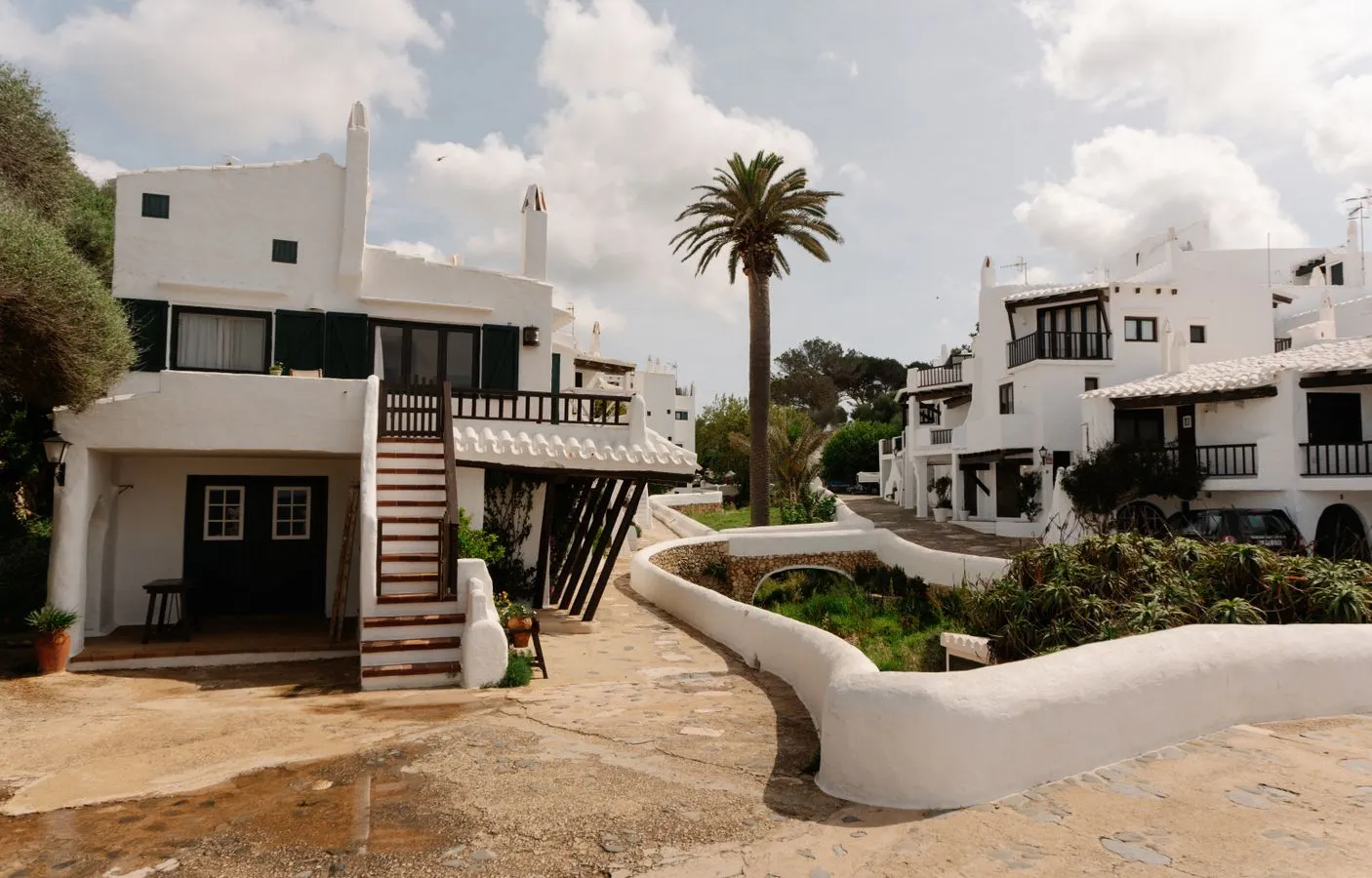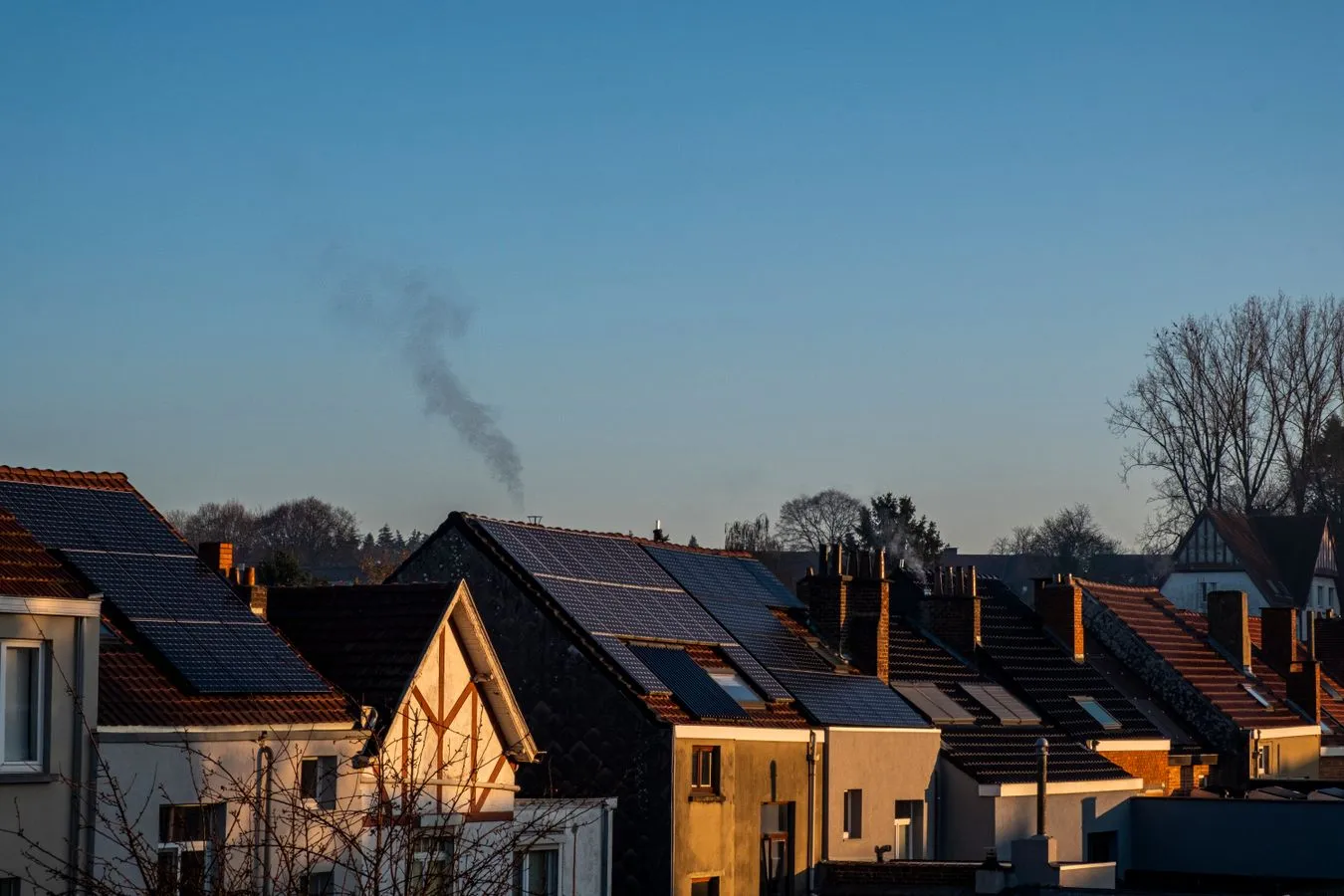
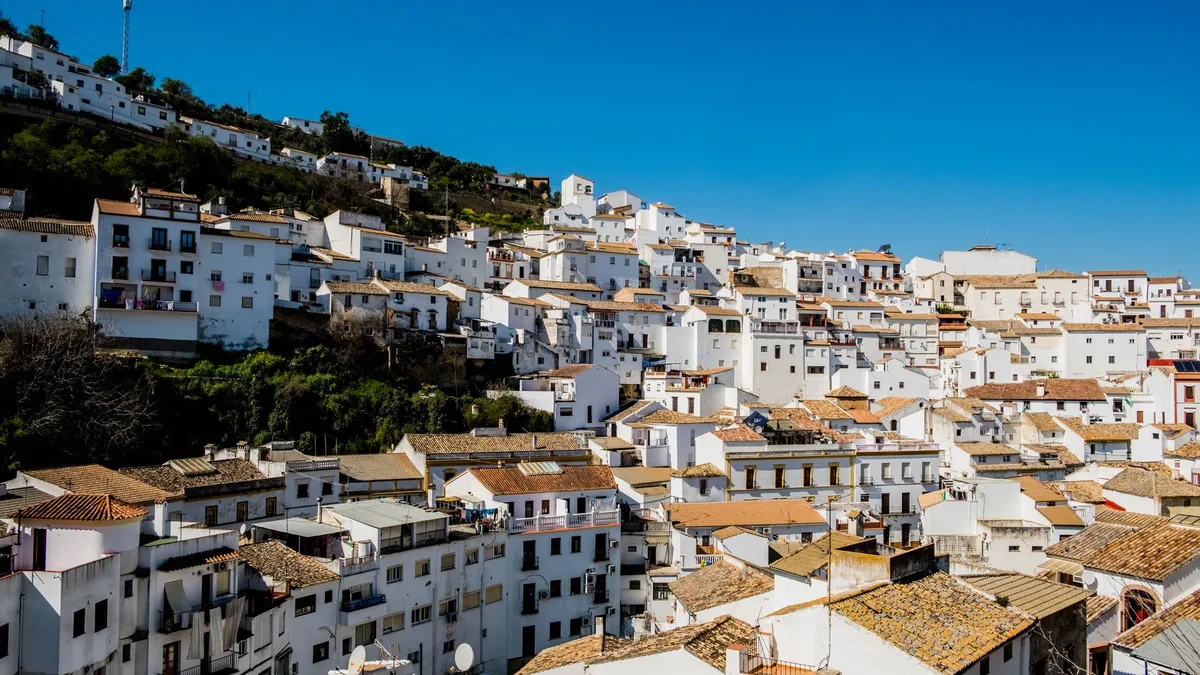
In Ibiza the question about solar panels is almost never whether you can install them. It is which document you have to file, and with whom. The island combines a protected historic centre, a great deal of housing on rural land, and a planning regime specific to the Balearic Islands that does not match what the national guides describe. At VATSOLAR we handle the paperwork for residential installations across all four islands, and this guide sets out what we see week after week.
The real question: prior notification or licence?
There is almost nowhere that installing solar panels is prohibited. What changes from case to case is the procedure, and in the Balearic Islands it resolves into two very different regimes.
The first depends on the type of land the house sits on, urban or rural. The second depends on the building itself: whether it is catalogued, whether the work touches the structure, and whether an environmental assessment is needed. Getting the regime right from the start is what separates a few weeks of paperwork from several months.
Roof on urban land: prior notification
This is the majority case: a home inside an urban centre with the panels on the roof.
Under law 12/2017 of 29 December, on planning in the Balearic Islands, installing photovoltaic panels on building roofs falls under the prior notification regime (comunicación previa). It is not a building licence: it is a notification that entitles you to begin, and the difference in timescales is considerable.
The prior notification is submitted together with the project or technical report required by regulation, plus a sworn declaration that none of the excluded circumstances apply. This is set out in article 153.1.e) of the same law, read with article 148.4.
The three cases that do need a licence
Prior notification does not apply, and a municipal planning licence is required, whenever any of these three circumstances arises:
- The building is a listed cultural asset or is catalogued. In Ibiza this carries more weight than on the other islands, given the volume of protected building stock and the historic city.
- The work affects the foundations or structure of the building. A roof needing reinforcement to carry the installation falls here.
- The installation requires an environmental impact assessment under the applicable environmental rules.
Outside these three cases, the route is prior notification.
Houses on rural land: the costliest misunderstanding in Ibiza
Many owners of a country house in Ibiza assume that protected rural land closes the door to self-consumption. It does not.
Article 48 of law 10/2019 on climate change and energy transition in the Balearic Islands establishes that renewable installations for self-consumption on legally built structures located in rural or protected rural land are a permitted use and do not require a declaration of general interest.
The two words holding up that whole paragraph are “legally built”. The condition is not the degree of protection of the land, it is that the building is in order. For a legal house on protected rural land, self-consumption on the roof is a permitted use, and the procedure returns to the ordinary municipal one.
The different case is a ground-mounted installation rather than one on the building. There the land’s suitability rating does come into play, and it is checked against the suitability maps published on IDEIB, the Balearic spatial data infrastructure.
The threshold that applies only in Ibiza and Formentera
Here there is a local particularity the general guides do not capture.
For ground-mounted photovoltaic installations, type A covers those with a power output no greater than 100 kW and a territorial occupation below 0.3 hectares. In Ibiza and Formentera that occupation limit drops to 0.15 hectares, half as much.
Type A installations located in high or medium suitability zones count as a permitted use and are processed through a licence or prior notification at the town hall. The rest need either a public utility declaration, applied for at the Directorate General for Energy and Climate Change, or a declaration of general interest, applied for at the relevant town hall.
For a home the figure is rarely a constraint, since 0.15 hectares is 1,500 square metres. But it sets the boundary of a ground-mounted project on an Ibizan plot, and explains why a calculation made with the threshold used on the other islands may not hold.
Activities licence: when it is not needed, and when it is
A photovoltaic installation is not an activity for the purposes of law 7/2013 on the legal regime for the installation, access to and exercise of activities in the Balearic Islands, as amended by law 6/2019. It is excluded from its scope.
The exceptions are the same two as before: installations on catalogued buildings or with an impact on historic and artistic heritage, and those requiring an environmental impact assessment under law 11/2006.
What happens if you install without filing
An unregistered installation still produces energy, which is why the problem is sometimes played down. The consequences, though, are very concrete:
- It cannot be entered in the Balearic self-consumption register.
- The distributor does not apply surplus compensation to the bill, so every unit of energy sent to the grid is given away.
- Neither the IBI rebate nor the regional grants can be claimed, as both require the installation to be properly filed. We cover these in our guides to IBI and ICIO tax rebates in the Balearic Islands and how to apply for the 2026 grants.
- The town hall can open planning enforcement proceedings.
From permit to registration: the 13-step process
The municipal permit is one step in a longer procedure. The Balearic government publishes a processing portal for small-scale self-consumption installations, up to 500 kW, organised into thirteen steps: from grid access and connection permits with the distributor through to commissioning, entry in the self-consumption register, and notification of the simplified compensation mechanism.
A home does not pass through all thirteen, but through enough of them to justify treating the paperwork as part of the project rather than an afterthought. At VATSOLAR we handle it within the service, with the documentation prepared for whichever regime applies.
Where to start
Before looking at paperwork, it is worth knowing what fits on the roof. With the VATSOLAR configurator you draw your roof on the map, enter your monthly bill, and get the recommended system size, the indicative cost and the estimated annual output for Ibiza in about a minute, working from roughly 1,500 kWh per year for each kW installed according to PVGIS reference data for the Balearics.
From that base, working out the applicable regime is immediate: type of land, status of the building, and whether it is catalogued. If your house is in a protected centre or on rural land, it is worth confirming the position for your specific address before committing to anything, because the municipal layer varies. This article sets out the general regime; we review your particular case with you.
If your house is in Menorca, the sister guide covers solar panels on townhouses and country homes.